How Salt and Ice Melt Products Affect Omaha Lawns and What You Can Do to Protect Them
Learn how salt and ice melt products affect Omaha lawns and discover practical ways to prevent and repair winter salt damage for a healthier spring lawn.
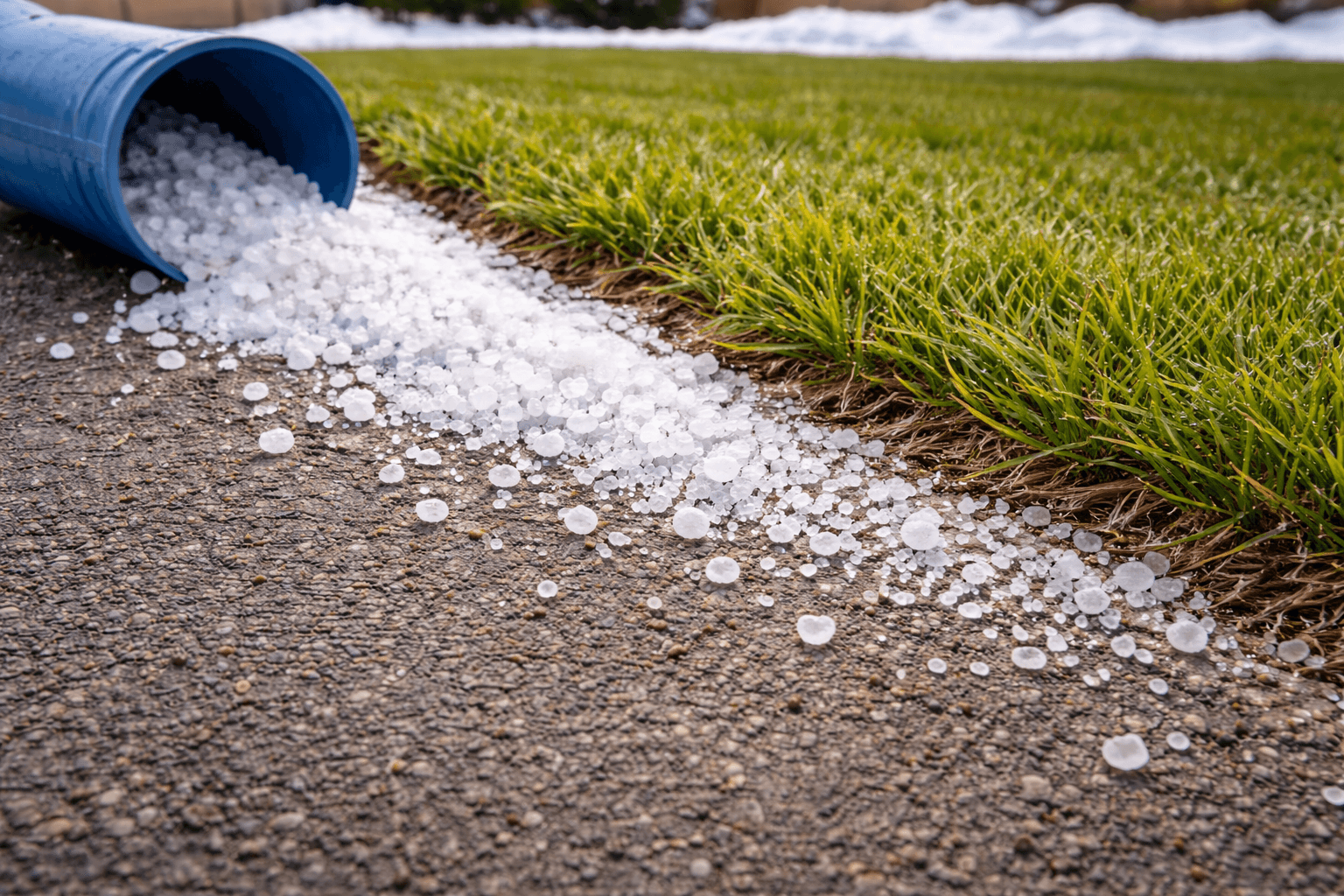
Winter in Omaha brings ice, snow, and freezing temperatures that make sidewalks and driveways slippery. To stay safe, most homeowners use salt or ice melt products. While these materials help prevent accidents, they can also create serious problems for your lawn. Each winter, Brightside sees the same pattern across the city. Lawns near driveways, sidewalks, curbs, and entryways begin to show discoloration, thinning, or dead patches by early spring. Much of this damage is directly connected to salt exposure.
Understanding how salt affects grass, soil, and plant health is the first step in preventing winter stress. With a few simple precautions, you can protect your lawn through the cold months and ensure it rebounds strong when temperatures warm. This guide explains what salt does to turf, what warning signs to watch for, and how Omaha homeowners can prevent or repair salt related lawn damage.
Why Salt Harms Grass in Winter
Salt affects your lawn in two major ways. First, it pulls moisture from plant tissue and soil. Second, it disrupts the natural balance of nutrients your grass depends on.
Sodium based products, like traditional rock salt, draw water away from grass blades and roots. During winter, when grass is already under stress, this dehydration can be severe. Salt also accumulates in the soil near sidewalks and driveways. Over time, these sodium deposits interfere with the soil structure and make it harder for water, air, and nutrients to move freely.
When spring arrives, the affected turf often appears Straw colored Slow to green Thin or patchy Uneven in texture Because the damage begins beneath the snow, most homeowners do not see the impact until thawing begins.
Omaha’s Freeze Thaw Cycle Makes Salt Damage Worse
Our local weather patterns play a big role in how salt affects lawns. Omaha winters often include frequent shifts between freezing and above freezing temperatures. This causes snow and ice to melt during the day and refreeze at night.
Every time melting occurs, salt dissolves and spreads deeper into the soil. Then, as temperatures drop again, the remaining salty water refreezes, causing added stress on grass crowns and roots. Heavy plowing, shoveling, and street sanding also contribute to salt movement. Snow piles pushed off driveways and sidewalks carry salt with them, concentrating it in specific areas of the lawn.
Common Areas Where Salt Damage Shows Up
Salt injury rarely appears randomly across the yard. It almost always occurs in predictable locations such as Edges of driveways Sidewalk borders Mailbox areas Curbside strips Places where snow is piled repeatedly Lawns with south facing driveways may show more damage because melting happens faster and more often. Homes near busy streets also experience more salt drift from road treatments.
If you notice fading color or straw like patches in these areas early in spring, salt damage is a likely cause.
Different Ice Melt Products Have Different Impacts
Not all ice melt products harm lawns equally. Understanding the differences helps you make better winter choices. Rock salt Common and inexpensive Most damaging to grass and soil High sodium content that dries out turf. Calcium chloride Less harmful than rock salt Works well in very low temperatures Can still cause mild to moderate turf injury.
Magnesium chloride More lawn friendly Less corrosive Better for areas close to grass Pet safe ice melts Designed to be gentle on paws and lawns Contain less sodium Still require careful use While safer alternatives exist, no product is entirely risk free. Even lawn friendly ice melts can cause issues if used excessively.
How to Protect Your Omaha Lawn from Salt Exposure
You can significantly reduce salt related damage with a few smart strategies. Use salt sparingly Apply only what is needed to prevent slipping Avoid scattering salt onto the lawn Use a handheld spreader for better control.
Switch to lawn friendly ice melt Choose calcium or magnesium chloride when possible Use pet safe products near entryways. Create protective barriers Place burlap or temporary fencing between the sidewalk and lawn Install edging stones or barriers in high risk zones.
Redirect snow piles Avoid pushing salty snow onto the lawn Designate a plowing area away from turf Spread out snow piles to limit concentration. Sweep excess salt After warmer days, sweep leftover salt off hard surfaces Prevent it from washing into the lawn during the next melt. These simple actions make a major difference in how your lawn performs when spring arrives.
How to Repair Salt Damage in Spring
If you begin to notice salt damage once the snow melts, there are several ways to help your lawn recover. Flush the soil Water the affected areas thoroughly in early spring This helps wash excess salt deeper into the ground where it is less harmful Apply gypsum Gypsum helps improve soil structure and displace sodium It is especially helpful for clay heavy Omaha soils
Rake and loosen the soil Break up crusted or compacted patches Open pathways for air and moisture Apply spring fertilizer A balanced early application helps grass rebuild strength Overseed if needed In severe cases, thin areas may need overseeding later in the year Focus on repairing the soil first for best results With proper care, most salt damaged lawns make a full recovery.
Why Understanding Salt Damage Matters for Omaha Homeowners
Winter weather is a defining part of life in Nebraska. Ice and snow management keeps families safe, but it also requires careful decision making to protect your lawn. By choosing the right ice melt products, monitoring where snow is piled, and maintaining good winter habits, you can preserve the health of your turf and avoid costly repairs in spring.
At Brightside, we help Omaha homeowners navigate these challenges every year. Our team understands the effects winter has on local turf and soil conditions, and we are here to help you keep your lawn healthy through every season.