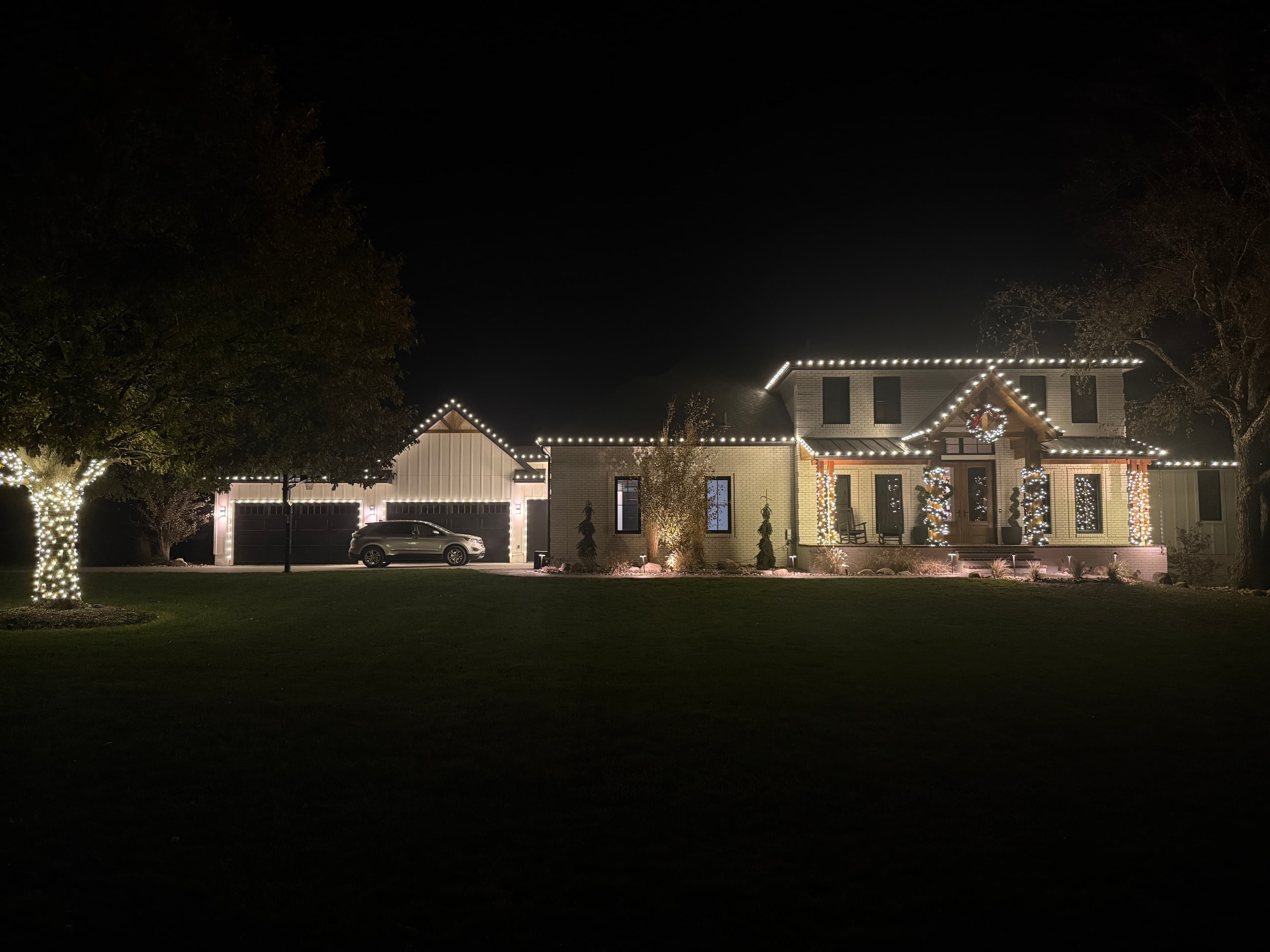
How Holiday Lighting Is Designed and Installed for Omaha Homes
Learn how holiday lighting is designed and installed for Omaha homes, from evaluating the house to installation, maintenance, and seasonal removal.
Holiday lighting often looks effortless once it is in place. A home glows evenly, rooflines are clean, and the display feels balanced without being overwhelming. What many homeowners do not see is the thoughtful process that happens behind the scenes to create that result. Holiday lighting is not something that comes together in a single afternoon. It is built through a series of intentional steps that begin long before lights are installed.
Understanding how this process works helps Omaha homeowners make informed decisions and know what to expect when the holiday season arrives. January is a useful time to learn this process because the last season is still fresh and there is no pressure to act quickly.
Understanding the Home Before Any Lights Are Chosen
Every holiday lighting display starts with the home itself. The shape of the roof, the height of the peaks, the placement of windows, and the size of the entryway all influence how lighting should be applied. A well designed display works with the architecture rather than fighting it.
During this stage, the focus is on how the eye naturally moves across the front of the home. Tall peaks may need definition, while long rooflines benefit from clean, consistent lighting. Entryways often become focal points because they draw attention naturally. In winter, this evaluation becomes easier because trees are bare and landscaping is minimal, allowing the structure of the home to stand out clearly.
Deciding Where Light Adds Balance and Where It Does Not
Once the structure of the home is understood, the next part of the process is deciding where lighting actually improves the appearance. Not every surface needs lights, and adding too much can make a display feel cluttered.
This step is about balance. Lighting is used to frame the home, highlight key features, and create symmetry where possible. Areas that already stand out may need less attention, while darker sections can benefit from subtle definition. Thoughtful placement keeps the display clean and visually comfortable, especially when viewed from the street.
Shaping the Overall Style of the Display
With placement in mind, the display begins to take on a personality. This is where style choices come into play. Some homes feel best with warm white lighting and simple lines, while others can support color or decorative elements.
Style decisions are influenced by the home’s design, the surrounding neighborhood, and personal preference. The goal is to create a look that feels natural year after year rather than trendy for one season. When style is chosen intentionally, the display feels cohesive rather than pieced together.
Incorporating Trees and Landscape Features Thoughtfully
After the home itself is addressed, attention often turns to the yard. Trees, shrubs, and landscape features add depth to a holiday display and help it feel complete.
This part of the process considers scale and spacing. Large trees can anchor a display, while smaller shrubs add soft accents near the foundation. Lighting is used sparingly so the yard complements the house rather than competing with it. When landscape lighting is planned carefully, it enhances curb appeal without overwhelming the main structure.
Selecting Materials That Support the Design
Once the design is established, the lighting materials are chosen to match it. This includes determining strand lengths, bulb spacing, color consistency, and attachment methods. These details matter more than many homeowners realize.
Proper material selection ensures even brightness, straight lines along roof edges, and a finished appearance from every angle. It also helps the lighting withstand Omaha winter weather, where wind, snow, and freezing temperatures are part of the season.
Installing the Lighting with Precision and Care
Installation is where the planning becomes visible. Each section of lighting is placed according to the design, secured properly, and adjusted for symmetry. This step requires patience and attention to detail. Proper installation protects the home by avoiding damage to shingles, gutters, and siding. It also ensures the display looks consistent throughout the season. When installation follows a clear plan, the result is cleaner, safer, and more reliable.
Maintaining the Display Throughout the Season
Once the lights are on, the process is not quite finished. Winter weather can shift strands, loosen connections, or affect bulbs. Maintenance ensures the display continues to look the way it was intended. Checking for outages, adjusting loose sections, and monitoring timers keeps the lighting consistent. This step is especially important in Omaha, where weather can change quickly.
Removing and Storing Lights for Long Term Use
After the holidays, lights are removed carefully to protect both the home and the materials. Frozen clips, brittle wires, and icy surfaces require patience and proper handling.
Lights are then organized and stored in a way that prevents tangling and damage. Proper removal and storage extend the life of the lighting and make the next season easier to prepare for.
Why Learning the Process in January Helps
January is not about making decisions. It is about understanding how holiday lighting comes together. When homeowners know the process, future planning feels simpler and less rushed. Even a basic understanding of these steps can make the next holiday season smoother and more enjoyable.