How Omaha Weather Patterns Shape the Timing of Your Spring Overseeding Plan
Learn how Omaha weather patterns influence the timing of spring overseeding and discover how soil temperature, moisture, and wind affect successful lawn establishment.
Overseeding is one of the most effective ways to improve lawn thickness, color, and durability. But in Omaha, success depends heavily on timing. Our local weather patterns do not follow a neat calendar, and spring conditions can change quickly.
Understanding how temperature swings, moisture levels, and soil conditions affect seed establishment helps homeowners make better decisions and avoid wasted effort.
At Brightside, we see many lawns struggle not because overseeding was a bad idea, but because it was done at the wrong time. This guide walks through how Omaha weather influences spring overseeding and how homeowners can align their plans with local conditions for better results.
Why Overseeding Timing Matters in Omaha
Cool season grasses like Kentucky bluegrass and fescue dominate Omaha lawns. These grasses grow best when soil temperatures are moderate and moisture is consistent. If seed goes down too early, cold soil slows germination. If it goes down too late, rising temperatures and weed pressure compete with young grass.
Spring overseeding works best when weather supports steady germination and early root development. Because Omaha weather rarely behaves the same way two years in a row, timing must be based on conditions rather than dates.
How Soil Temperature Guides Seed Germination
Soil temperature is one of the most important factors in overseeding success. Grass seed begins to germinate reliably when soil temperatures consistently reach the low to mid fifties.
In Omaha, this can happen anywhere from late March to late April depending on the year. Warm afternoons alone are not enough. Overnight temperatures and soil warmth must remain steady.
This is why overseeding too early often fails. Seed may sit dormant for weeks or rot in cold, wet soil before it ever sprouts.
Spring Moisture Can Help or Hurt New Seed
Spring moisture is another major factor shaped by local weather. Snowmelt and early spring rain can provide excellent hydration for seed, but too much moisture creates problems. Omaha springs often bring heavy rain events followed by dry, windy days. Excess moisture can wash seed away, while sudden drying stresses seedlings before roots develop.
Successful overseeding requires a balance. Soil should be moist but not saturated, and watering must supplement rainfall carefully. Understanding typical spring rainfall patterns helps homeowners plan when overseeding has the best chance to succeed.
Freeze Thaw Cycles Affect Seedbed Conditions
One unique challenge in Omaha is the freeze thaw cycle that often continues well into spring. Soil can freeze overnight and thaw during the day for weeks. These cycles can help loosen compacted soil slightly, which is beneficial. However, they can also disrupt newly placed seed if overseeding is done too early. Seed may be pushed out of the soil or left exposed to cold air and drying winds.
Waiting until freeze thaw cycles subside helps ensure seed stays in place and maintains proper soil contact.
Wind Is an Overlooked Omaha Challenge
Spring winds are common in eastern Nebraska and can dry out soil quickly. Young seedlings are especially vulnerable to wind stress because their roots are shallow.
When overseeding is timed during a windy stretch without adequate moisture, seedling survival drops. Planning overseeding during a period of calmer weather improves germination and early growth. Mulching lightly with soil plugs from aeration or topdressing can help protect seed from wind exposure.
Weed Pressure Increases as Spring Progresses
As temperatures rise, weeds begin to germinate rapidly. Crabgrass and other annual weeds thrive in warming soil and can quickly outcompete new grass seedlings. This creates a narrow window for spring overseeding. Seed must establish before weed pressure becomes too strong. This is one reason fall overseeding is often preferred, but spring overseeding can still be successful when timed carefully.
Understanding when weed activity typically increases in Omaha helps homeowners decide whether spring overseeding is appropriate for their lawn.
How Aeration Improves Overseeding Success
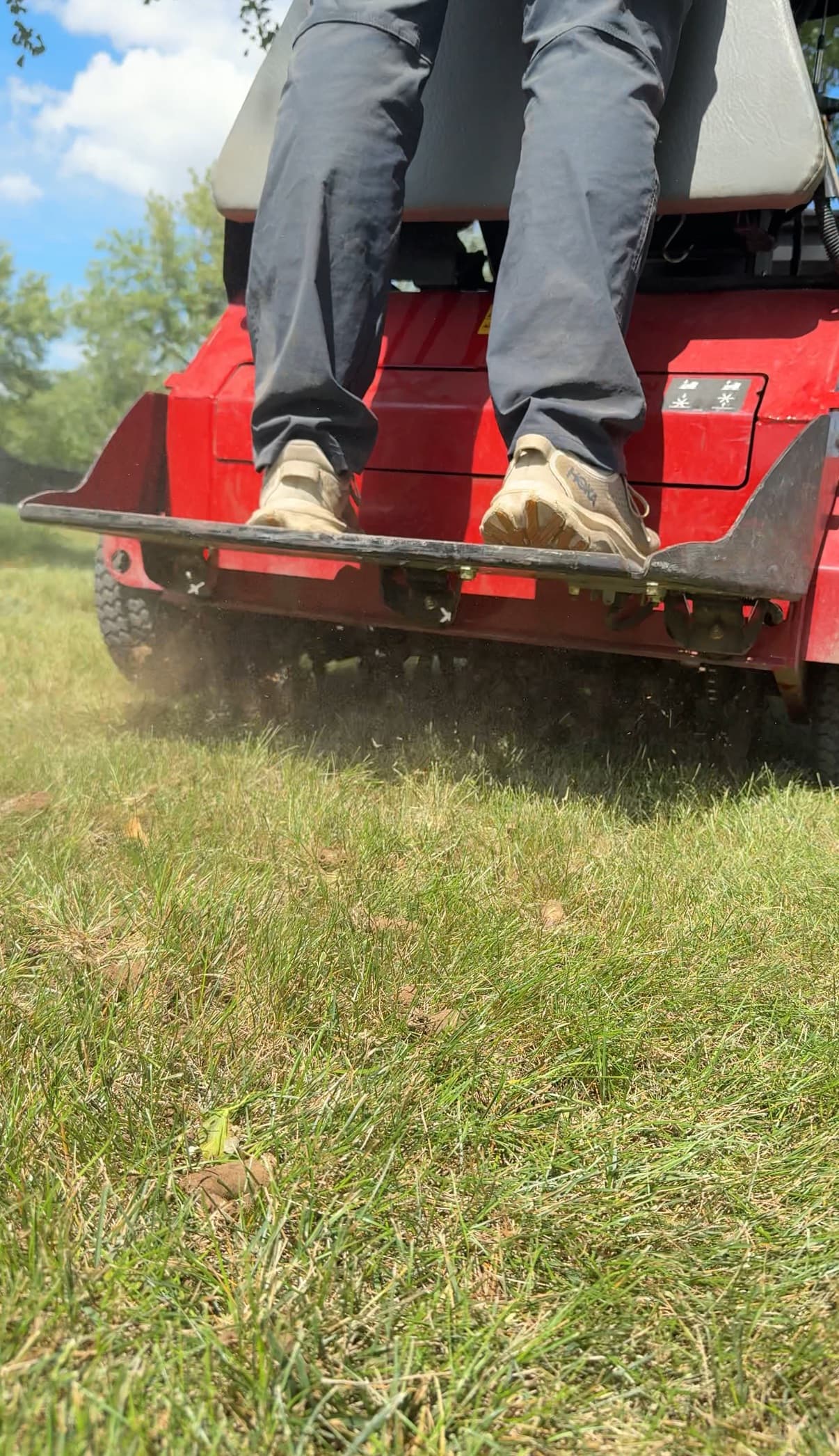
Aeration plays a critical role in spring overseeding. Core aeration opens the soil, reduces compaction, and creates ideal pockets for seed to settle.
In Omaha’s clay heavy soils, overseeding without aeration often leads to poor results because seed struggles to make contact with the soil. Aeration combined with overseeding improves moisture retention and root penetration. This is why overseeding plans are often built around aeration timing rather than the calendar.
Evaluating Whether Spring Overseeding Is the Right Choice
Not every lawn benefits equally from spring overseeding. Lawns with minor thinning may respond well, while lawns with major bare areas often require a more strategic approach. Spring overseeding is most effective for Repairing winter damage Filling in thin spots Improving overall density.
Lawns with severe compaction, drainage issues, or heavy weed problems may need soil improvement first before overseeding can succeed.
Why Omaha Weather Makes Planning Essential
Because Omaha weather can shift quickly, spring overseeding should always be planned with flexibility. Watching soil temperature trends, monitoring rainfall, and coordinating aeration all improve results. Planning early allows homeowners to move quickly when conditions are right instead of reacting after the window has passed.
How Brightside Helps Homeowners Time Overseeding Correctly
At Brightside, we monitor local weather patterns closely and adjust overseeding plans based on real conditions rather than fixed dates. Our approach considers soil temperature, moisture, compaction, and overall lawn health.
By aligning overseeding with Omaha’s unique spring weather, we help homeowners achieve thicker, healthier lawns that perform better through summer.