How Omaha Soil Conditions Affect Lawn Health More Than Fertilizer Alone
Learn how Omaha soil conditions affect lawn health more than fertilizer alone. Discover why clay soil, compaction, and drainage play a major role in turf performance.
When Omaha homeowners think about improving their lawn, fertilizer is often the first thing that comes to mind. While fertilization plays an important role, it is only part of the picture. In many cases, soil conditions have a greater impact on lawn health than any product applied to the surface.
Omaha's soil presents unique challenges that influence how grass grows, how nutrients move, and how well lawns handle stress. Understanding what is happening below the surface helps homeowners set realistic expectations and make better decisions as spring approaches.
This guide explains how local soil conditions shape lawn performance in Omaha and why healthy soil is the foundation of a healthy lawn.
Omaha's Clay Heavy Soil Shapes Everything
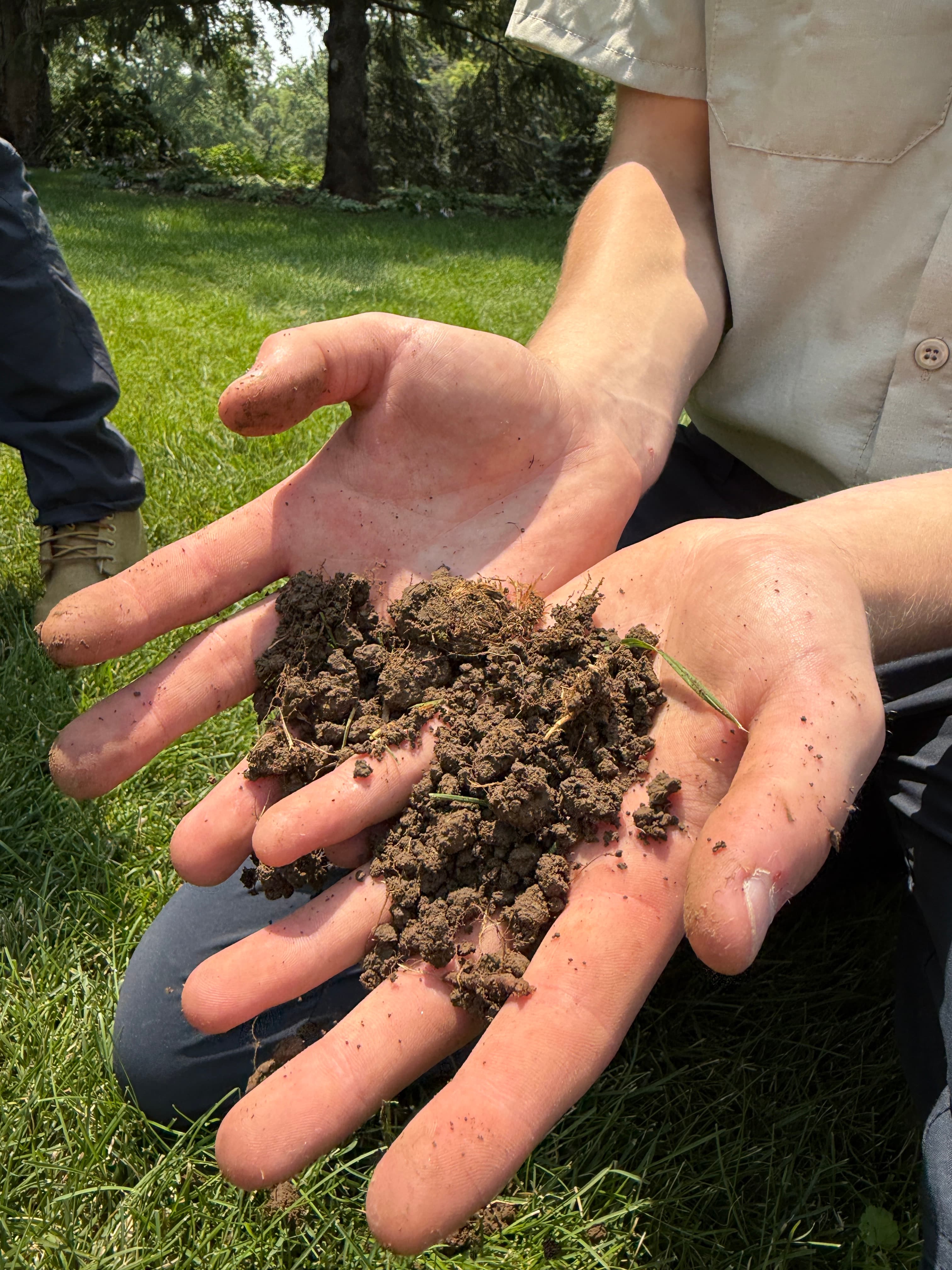
Much of the Omaha metro area sits on clay heavy soil. Clay particles are small and tightly packed, which affects how water, air, and nutrients move through the ground.
Clay soil tends to hold moisture longer after rain, drain slowly during wet periods, compact easily under foot traffic, and restrict root growth when dense.
These characteristics mean that even well fertilized lawns can struggle if roots cannot access oxygen or spread freely. Grass health depends on what the soil allows roots to do.
Why Fertilizer Alone Cannot Fix Poor Soil Structure
Fertilizer provides nutrients, but it does not change soil structure. If soil is compacted or poorly drained, nutrients may sit near the surface or wash away instead of being absorbed.
In dense Omaha soils, roots often stay shallow because they cannot penetrate compacted layers. Shallow roots lead to lawns that dry out quickly, thin during summer heat, and struggle to recover from stress.
Improving soil structure allows fertilizer to actually do its job.
Compaction Is One of the Biggest Hidden Problems
Soil compaction builds gradually over time. Winter foot traffic, snow piles, mowing patterns, and even rainfall contribute to compressed soil.
Compacted soil limits root depth, water infiltration, oxygen availability, and microbial activity.
Many lawns that look healthy on the surface are actually struggling below ground. Addressing compaction is often the turning point for long term improvement.
Drainage Issues Create Uneven Lawn Performance
Poor drainage is common in Omaha neighborhoods, especially in low lying areas or properties with heavy clay content. When water sits too long, roots lose access to oxygen and become weak.
Lawns with drainage issues often show patchy growth, slow spring green up, increased disease risk, and thin turf in wet areas.
No amount of fertilizer can correct poor drainage on its own. Soil improvement is necessary for consistent results.
Soil Health Influences Nutrient Availability
Even when nutrients are present, soil conditions determine whether grass can use them. Healthy soil supports beneficial microorganisms that help break down nutrients into forms grass can absorb.
In compacted or poorly balanced soil, nutrient movement slows. This can lead to symptoms like yellowing grass or uneven color, even when fertilizer has been applied correctly.
Improving soil health increases the efficiency of every lawn treatment that follows.
Root Health Starts with Oxygen and Space
Grass roots need oxygen just as much as they need water and nutrients. In compacted soil, air pockets disappear, limiting root respiration.
When soil structure improves, roots grow deeper and spread more evenly. Deeper roots help lawns access moisture during dry periods, handle summer heat more effectively, recover faster from stress, and maintain density.
This root development is what separates resilient lawns from those that struggle each year.
Why Spring Is a Key Time to Address Soil Issues
Spring offers an opportunity to correct soil problems before peak growth begins. As grass wakes up from dormancy, roots become active and respond well to improved conditions.
Addressing compaction and drainage early allows the lawn to take full advantage of spring growth. This sets the stage for stronger performance through summer and fall.
How Aeration Supports Omaha Soil Health
Core aeration is one of the most effective ways to improve soil structure in clay heavy areas. By removing small plugs of soil, aeration creates space for air, water, and nutrients to move more freely.
In Omaha lawns, aeration helps relieve compaction, improve drainage, encourage deeper root growth, and increase fertilizer effectiveness.
When paired with proper fertilization and overseeding, aeration delivers noticeable improvements over time.
Why Soil Focus Leads to Better Long Term Results
Lawns built on healthy soil require fewer corrective treatments. Grass grows more evenly, weeds struggle to establish, and seasonal stress has less impact.
By prioritizing soil health, homeowners move away from quick fixes and toward lasting improvement. Fertilizer becomes a tool that enhances results instead of a solution expected to fix everything.
How Brightside Approaches Soil Health in Omaha
At Brightside, we design lawn care programs around Omaha's soil conditions. Our approach focuses on relieving compaction, improving nutrient movement, and supporting root development alongside fertilization.
By addressing what is happening below the surface, we help homeowners build lawns that perform better season after season.