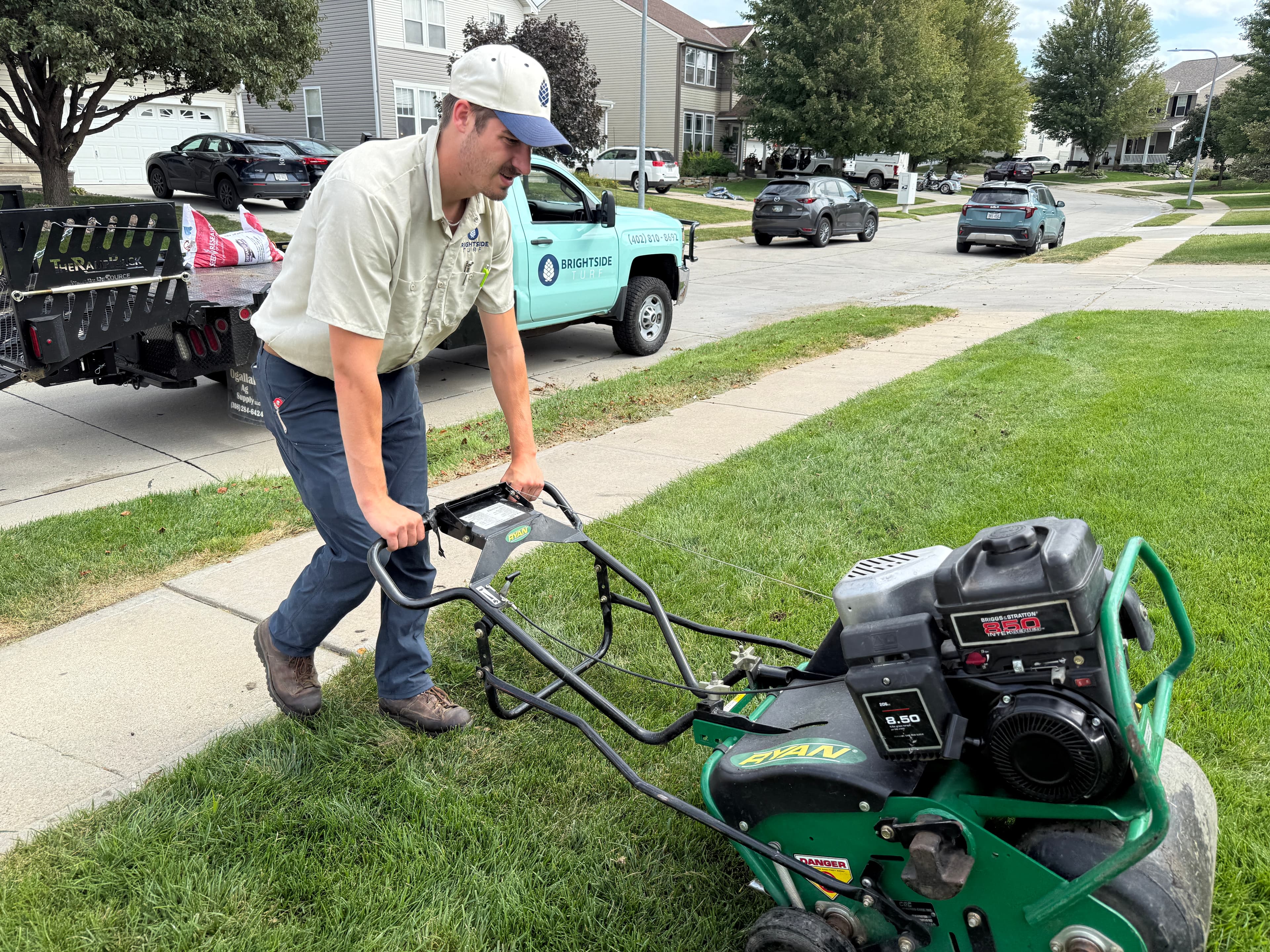
Why Aeration Timing Is Critical for Omaha Lawns Each Year
Learn why aeration timing is critical for Omaha lawns. Discover how soil conditions, grass growth, and seasonal windows affect aeration success.
Aeration is one of the most talked about lawn care services in Omaha, but timing is what determines whether it actually helps or quietly does nothing at all. Many homeowners know aeration is important, yet confusion remains about when it should be done and why certain windows matter more than others.
Omaha's climate, soil structure, and grass types make aeration timing especially important. Understanding how aeration fits into the growing cycle helps homeowners avoid common mistakes and get the most benefit from the service.
This guide explains why timing matters so much and how aeration works best in Omaha lawns.
What Aeration Actually Does for Your Lawn
Aeration works by removing small cores of soil from the lawn. These openings create space for air, water, and nutrients to move into the root zone more effectively.
In Omaha's clay heavy soils, this space is critical. Compaction builds quickly and restricts root growth. Aeration relieves that pressure and allows roots to grow deeper and stronger.
Without proper timing, however, those benefits are short lived or missed entirely.
Why Omaha Soil Compacts Faster Than Many Areas
Omaha lawns face constant compaction pressure. Clay soils naturally pack tightly, and everyday activities add to the problem.
Common contributors include foot traffic, mowing patterns, rainfall, snow piles, and winter walking paths. Over time, soil becomes dense enough that roots struggle to breathe. Aeration corrects this, but only when grass is ready to respond.
Grass Growth Determines Aeration Success
Cool season grasses dominate Omaha lawns. These grasses grow most actively during spring and fall, not during extreme heat or cold.
When aeration is performed during active growth periods, grass quickly recovers. Roots expand into newly opened soil, and turf fills back in evenly.
If aeration is done when grass is dormant or stressed, recovery slows and benefits are reduced.
Why Early Spring Aeration Can Be Risky
Many homeowners assume earlier is better. In Omaha, early spring aeration often happens before soil temperatures are warm enough for strong root activity.
When soil is too cold or overly wet, aeration holes can collapse instead of staying open. Grass may struggle to recover, and compaction relief is limited.
Waiting until soil conditions stabilize allows aeration to create lasting improvement rather than temporary disruption.
Late Spring Timing Has Its Own Challenges
Late spring brings stronger growth, but it also introduces weed pressure. Aerating too late can open soil just as weed seeds are germinating.
This timing can increase weed competition if overseeding or pre emergent planning is not coordinated properly. Aeration timing should always consider what else is happening in the lawn at that moment.
Fall Aeration Often Delivers the Strongest Results
For many Omaha lawns, fall is the most effective aeration window. Soil temperatures are warm, growth is active, and weed pressure is lower.
Fall aeration supports deep root development, improved nutrient uptake, better overseeding success, and stronger winter preparation.
Grass has time to recover fully before winter dormancy, making fall aeration a cornerstone of long term lawn health.
How Aeration Timing Affects Overseeding
Aeration and overseeding often work best together, but timing must align. Aeration creates ideal seed to soil contact when conditions are right.
In Omaha, overseeding paired with fall aeration typically produces the best results. Spring overseeding can work, but only when weather and soil conditions cooperate.
Mistimed aeration can reduce seed germination and limit overall improvement.
Lawns That Need Aeration More Frequently
Some lawns benefit from more frequent aeration due to their conditions. These include lawns with heavy clay soil, high foot traffic, poor drainage, and thatch buildup.
Understanding your lawn's specific needs helps determine not just when to aerate, but how often.
Why Aeration Should Be Planned, Not Reactive
Aeration works best as part of a larger lawn care plan. Waiting until grass looks stressed often means compaction has already limited growth.
Planning aeration around growth cycles allows the lawn to improve gradually and consistently. This proactive approach leads to stronger turf over time.
How Brightside Times Aeration for Omaha Lawns
At Brightside, aeration timing is based on soil conditions, weather patterns, and turf response rather than fixed dates. This allows aeration to deliver real benefits instead of surface level disruption.
By aligning aeration with the lawn's natural growth cycle, we help Omaha homeowners build healthier, more resilient lawns year after year.