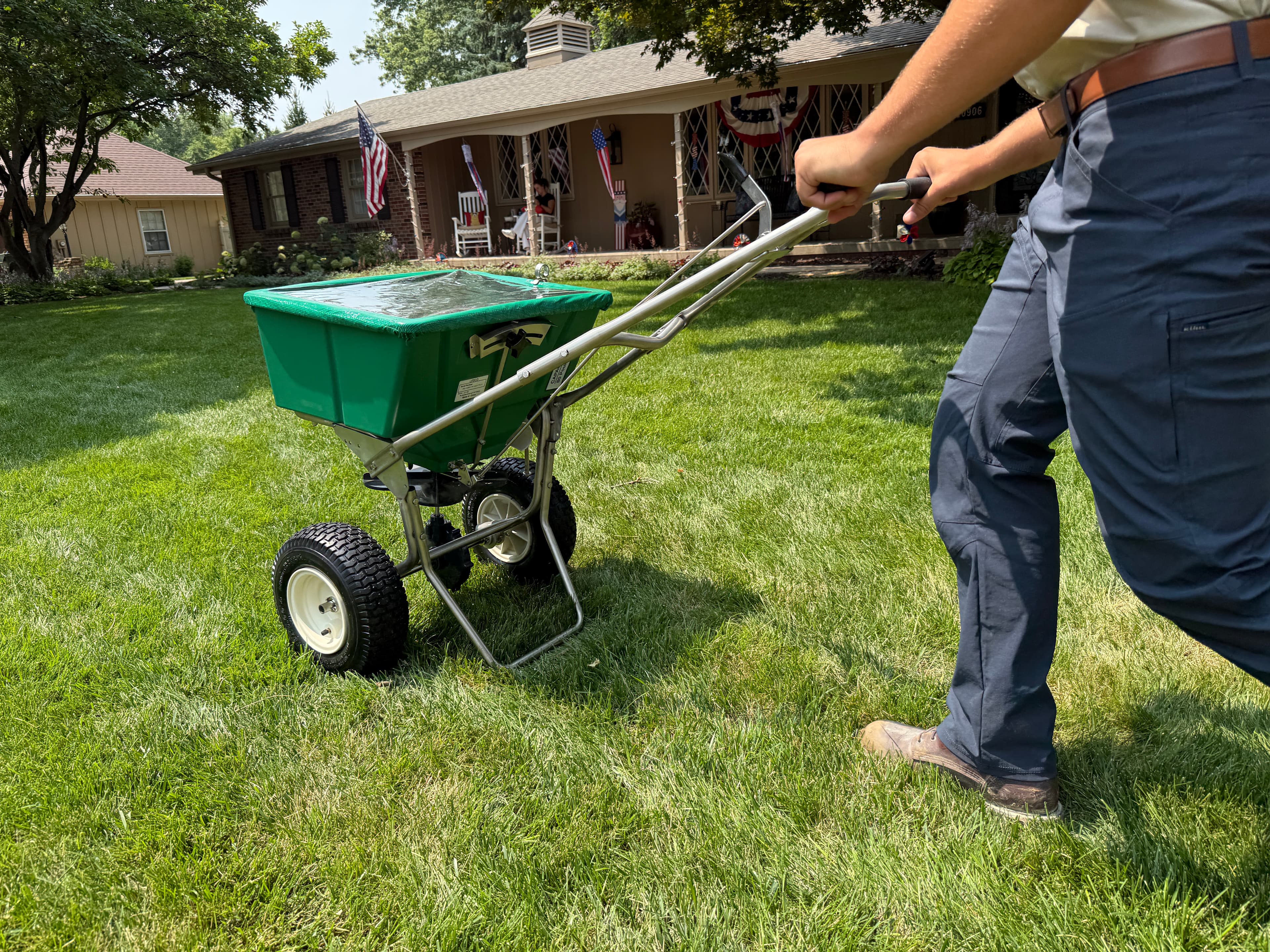
The Role of Early Spring Fertilizer in Building Strong Roots
Early spring fertilizer in Omaha supports root recovery and long term lawn health. Learn why proper timing builds stronger turf from the ground up.
When Omaha homeowners think about fertilizer, they usually picture greener grass. But in early spring, fertilizer plays a much more important role than surface color. At Brightside, we focus on what is happening below ground first, because strong roots are what determine how a lawn performs all season long.
Early spring fertilizer, when applied correctly and at the right time, supports root development, recovery from winter stress, and long term turf density. Understanding this purpose helps homeowners avoid chasing fast green up and instead build lasting lawn health.
Why Root Growth Comes Before Blade Growth
Grass plants prioritize survival before appearance.
After winter, roots need to repair damage caused by freezing, moisture stress, and compaction. Until the root system regains strength, top growth remains limited. This is by design.
Early spring fertilizer supports this recovery phase by providing nutrients that encourage root activity rather than excessive blade growth. When roots are healthy, visible growth follows naturally and more evenly.
How Nutrient Availability Changes in Spring
Cold soil affects how nutrients move and are absorbed.
In early spring, microbial activity in the soil begins to increase as temperatures rise. These microbes help convert nutrients into forms grass can use. When fertilizer is timed properly, nutrients become available as roots wake up.
If fertilizer is applied too early, before soil temperatures support uptake, nutrients may leach away or sit unused. Proper timing aligns nutrient availability with root demand.
Why Not All Fertilizers Work the Same
Different fertilizer blends behave differently in spring.
Quick release products push rapid top growth, which can stress grass that is not fully rooted yet. Slow release nutrients feed gradually, supporting root development without overwhelming the plant.
Professional lawn fertilization programs in Omaha are designed around these principles, using blends that match the season and soil conditions.
The Connection Between Early Fertilizer and Weed Resistance
Strong roots lead to thicker turf.
When grass establishes density early, it naturally shades soil and reduces space for weeds. This is one of the most effective forms of weed prevention.
Rushing fertilizer or applying the wrong product can actually thin turf, giving weeds more opportunity later. Balanced early nutrition helps the lawn compete naturally.
How Omaha Soil Influences Fertilizer Performance
Soil composition affects how fertilizer behaves.
Clay heavy soils hold nutrients differently than sandy soils. Moisture levels, pH, and compaction all influence nutrient availability. This is why the same fertilizer can produce very different results across properties.
At Brightside, we adjust fertilizer strategies based on local soil behavior rather than one size fits all schedules.
Signs Early Fertilizer Is Working Correctly
When fertilizer supports roots rather than forcing blades, changes are subtle at first.
Growth becomes steadier, not explosive. Color improves gradually and evenly. The lawn feels more anchored underfoot rather than soft or spongy.
These signs indicate the lawn is building strength that will pay off later.
Why More Is Not Better in Early Spring
Overapplication is a common mistake.
Too much nitrogen early can cause shallow root growth and increased disease susceptibility. It can also create uneven growth that requires frequent mowing before the lawn is ready.
Proper early spring fertilization is about precision, not quantity.
How Weather Impacts Fertilizer Timing
Omaha spring weather is unpredictable.
Rain, temperature swings, and late frosts all influence when fertilizer should be applied. Professionals monitor conditions and adjust timing to avoid wasted applications or stressed turf.
This flexibility is critical for consistent results.
What Homeowners Should Expect After Early Fertilization
Do not expect immediate dramatic green up.
Instead, expect improved resilience. The lawn should handle mowing better, recover faster from traffic, and respond more evenly as spring progresses.
These benefits often become more obvious in late spring and early summer.
Building a Foundation for the Growing Season
Early spring fertilizer sets the stage for everything that follows.
Lawns that build strong roots early are better equipped to handle heat, drought, and heavy use. They also require fewer corrective treatments later.
At Brightside, we view early fertilization as an investment in long term performance, not a cosmetic fix.
Supporting Healthy Growth the Right Way
Understanding the role of early spring fertilizer helps homeowners make informed choices.
When applied with intention and proper timing, fertilizer strengthens lawns from the ground up. When rushed or misused, it creates problems that linger all season.
Our approach at Brightside ensures Omaha lawns grow stronger first, greener second.