Why Lawns in Newer Omaha Developments Struggle More in Spring
Lawns in newer Omaha developments often struggle in spring due to compacted construction soil. Learn why and how to improve performance.
Homeowners in newer Omaha neighborhoods often notice something frustrating. Their lawn looks thinner, slower to green up, and more uneven compared to established areas of the city. Even with regular care, spring recovery can feel like an uphill battle.
At Brightside, we work in new developments across the metro and see the same patterns year after year. The issue is not effort. It is the soil. Understanding why newer lawns struggle in spring helps homeowners set realistic expectations and focus on solutions that actually work.
Construction Soil Is Not Lawn Friendly Soil
During construction, topsoil is often stripped away, moved, or compacted by heavy equipment. What remains is subsoil that lacks organic matter and structure. This soil holds water poorly when dry and drains poorly when wet. Roots struggle to establish depth and consistency.
In spring, this leads to delayed green up and uneven growth.
Compaction Limits Early Root Growth
Newer developments experience intense soil compaction. Heavy machinery compresses soil layers, reducing pore space needed for air and water movement.
In spring, compacted soil warms slowly and restricts root expansion. Grass may grow on the surface but lacks a strong foundation.
Why Moisture Management Is Harder in New Lawns
Water behaves unpredictably in construction soil. Some areas stay soggy while others dry out quickly. This creates stress patterns that slow recovery and weaken turf density.
In Omaha's variable spring weather, these inconsistencies become more pronounced.
Thin Turf Invites Weed Pressure
Sparse grass creates opportunity. Sunlight reaches the soil surface easily, warming it faster and encouraging weed germination. Crabgrass and other weeds thrive in these conditions.
Without intervention, weed pressure increases each year.
Why Fertilizer Alone Does Not Fix the Problem
Adding fertilizer helps only to a point. Without improving soil structure, nutrients cannot be used efficiently. Grass may green up briefly but lacks lasting strength.
True improvement requires addressing soil health, not just feeding the plant.
Why New Lawns Improve Slowly Over Time
Soil does not change overnight. Organic matter builds gradually through proper care, aeration, and consistent management. Each season adds small improvements that compound over time.
This is why patience is essential in newer developments.
What Homeowners Can Do to Improve Spring Performance
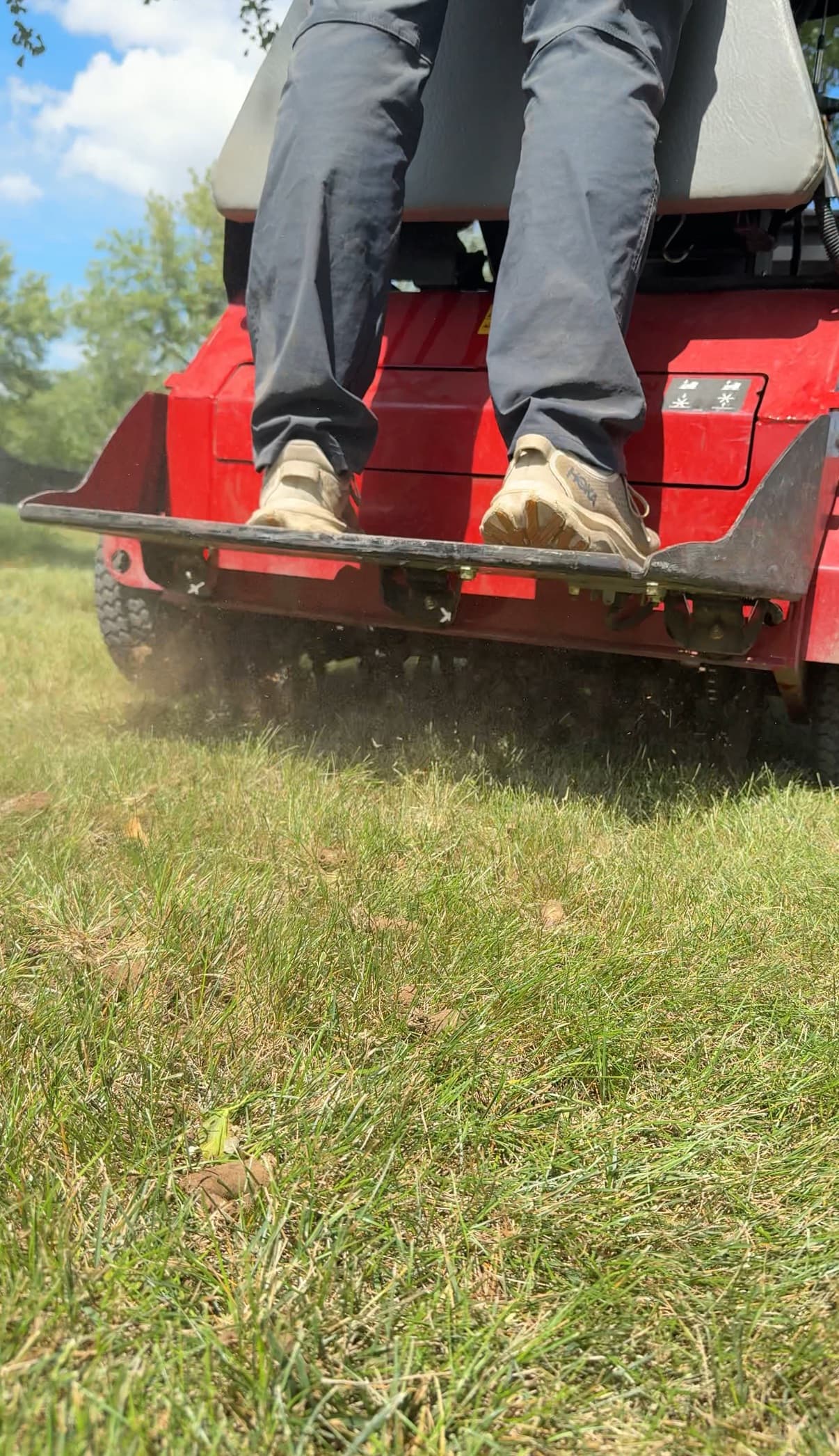
Focus on soil first. Reduce compaction through aeration. Build organic matter. Avoid overwatering. Mow at proper heights to protect turf density.
These steps create measurable improvement year after year.
Why Professional Programs Matter in New Developments
New lawns require a different approach. At Brightside, we customize programs for construction soil. Timing, application rates, and service sequencing all matter more in these environments.
Professional oversight helps avoid common setbacks.
Setting Realistic Expectations
New lawns rarely match established turf immediately. Progress is incremental. Consistency matters more than speed.
Understanding this prevents frustration and unrealistic comparisons.
Turning a Challenging Lawn Into a Strong One
While newer development lawns start at a disadvantage, they are far from hopeless. With the right approach, soil improves, roots deepen, and turf thickens.
At Brightside, we help Omaha homeowners navigate these challenges and build lawns that improve year after year.