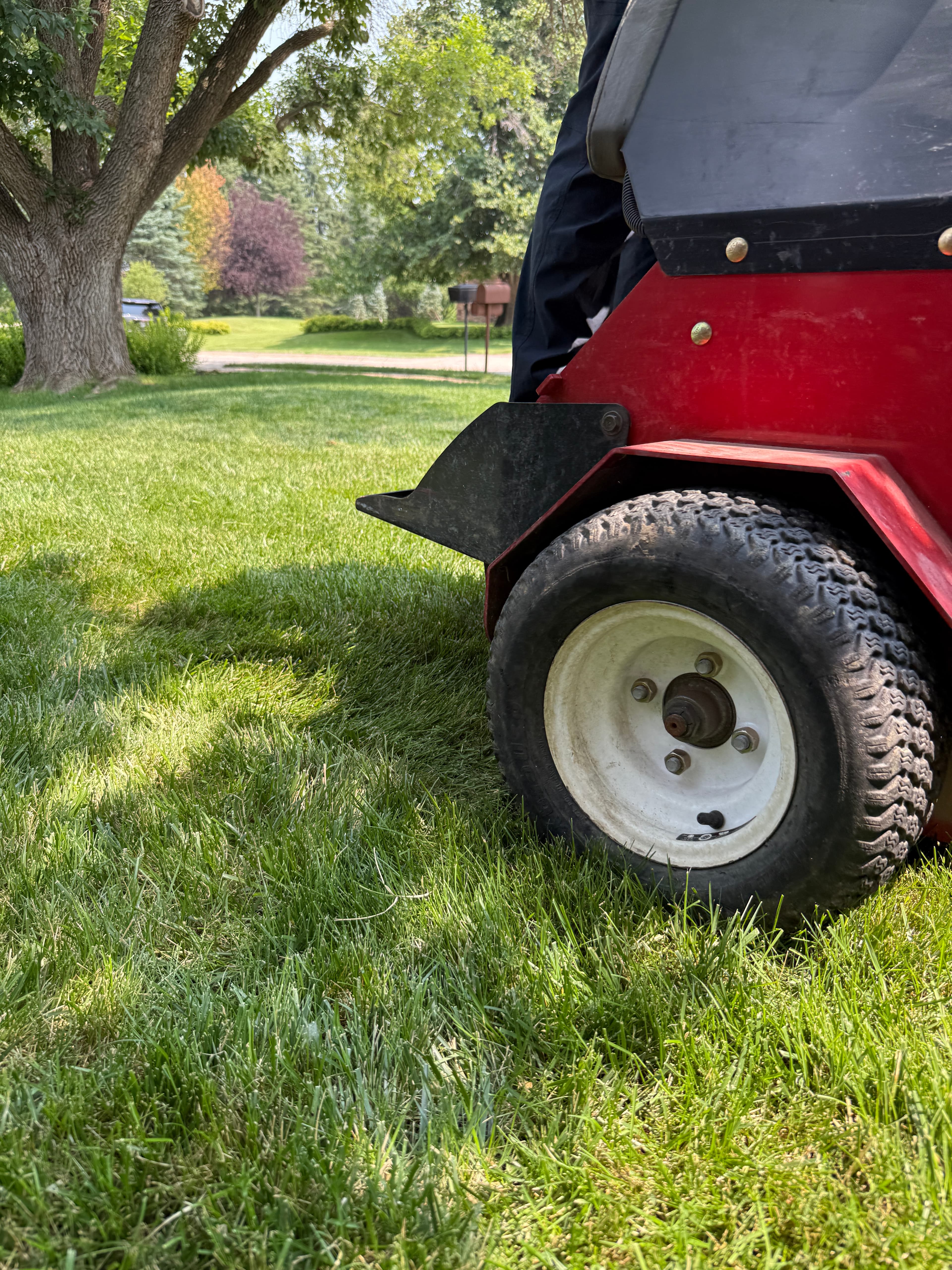
How Mowing Height in Early Spring Affects Lawn Thickness All Season
Early spring mowing height affects root depth, turf density, and weed resistance in Omaha lawns. Learn how proper mowing sets up season long success.
Mowing feels simple, but in early spring it has long term consequences. The height at which you mow in March influences turf density, root depth, and weed resistance throughout the entire growing season.
At Brightside, we see the results of early mowing decisions play out months later. Understanding how mowing height affects your Omaha lawn helps homeowners avoid thinning and set the stage for thicker turf.
Why Early Spring Grass Needs Extra Leaf Surface
In early spring, grass relies on its leaf surface to capture sunlight and generate energy. Cutting too short removes this energy source. The plant responds by diverting resources away from root development to replace lost blades. This weakens the lawn at a critical time.
Maintaining proper mowing height supports photosynthesis and steady recovery.
How Mowing Height Influences Root Depth
Grass grows in balance. Shorter blades result in shallower roots. Taller blades encourage deeper rooting. This relationship matters most in spring when roots are rebuilding after winter.
Deeper roots improve drought tolerance, nutrient uptake, and stability later in the season.
Why Scalping Causes Long Term Thinning
Scalping is one of the most damaging early spring mistakes. Removing too much growth at once stresses the crown and exposes soil. This creates uneven growth patterns and invites weed germination.
Once thinning occurs, it is difficult to fully reverse within the same season.
The Role of Mowing Height in Weed Suppression
Taller grass naturally suppresses weeds. By shading the soil surface, grass limits sunlight needed for weed seed germination. Short turf allows weeds like crabgrass to establish easily.
Early mowing height choices directly affect weed pressure months later.
Why Spring Growth Can Be Misleading
Early spring growth is uneven. Some areas grow faster due to warmth near structures or better drainage. Mowing the entire lawn to match these fast growing spots often leads to over cutting slower areas.
Patience and restraint prevent unnecessary stress.
How Omaha Climate Impacts Mowing Decisions
Omaha spring weather fluctuates. Cold nights, rain, and wind all affect growth rate. Lawns need flexibility, not rigid schedules.
Professional mowing adjusts height and frequency based on conditions, not calendar dates.
Recommended Early Spring Mowing Practices
Wait until growth is consistent before mowing. Remove no more than one third of blade height at a time. Use sharp blades. Avoid mowing wet turf.
These basics protect lawn structure and appearance.
When to Adjust Height Later in Spring
As temperatures rise and growth accelerates, mowing height may be adjusted slightly. However, maintaining a taller setting generally produces better results in Omaha lawns throughout the season.
Consistency matters more than precision.
Why Professional Mowing Looks Different
Professional mowing prioritizes lawn health. Patterns, height adjustments, and timing all contribute to uniform growth. This attention to detail reduces stress and improves density.
At Brightside, mowing is part of a larger care strategy, not a standalone task.
What Homeowners Should Watch For
After early spring mowing, observe recovery. Healthy lawns bounce back evenly. Stressed lawns show yellowing, thinning, or delayed regrowth.
These signals help guide adjustments.
Setting Up a Thicker Lawn
Mowing height may seem minor, but it is foundational. Early spring decisions shape lawn structure for the rest of the year.
At Brightside, we help Omaha homeowners build thicker lawns by getting the basics right from the start.