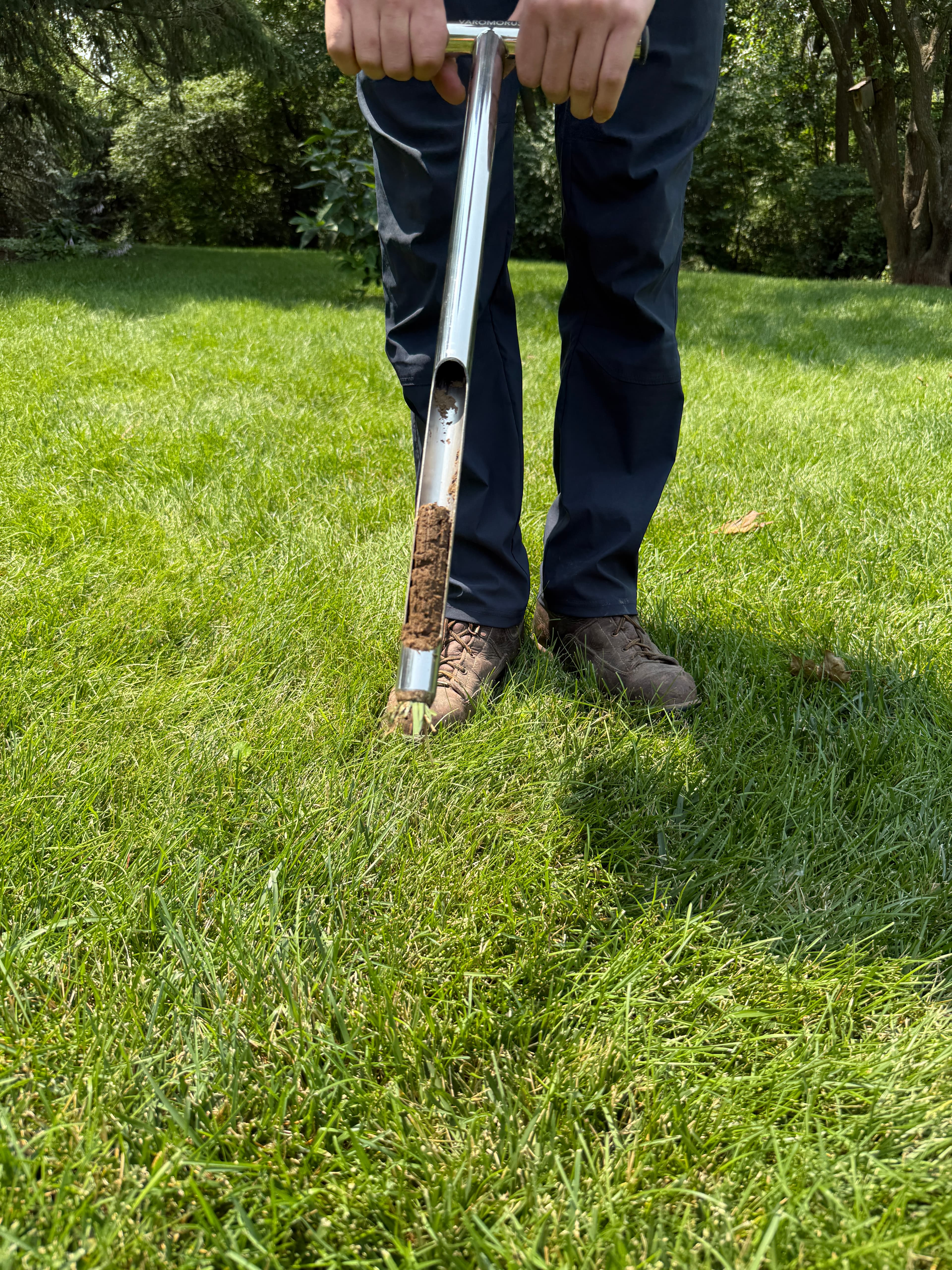
What Early Spring Lawn Color Really Tells You About Soil Health
Early spring lawn color reflects soil temperature and nutrient availability in Omaha lawns. Learn what yellow, purple, and uneven color really mean.
As Omaha lawns start to wake up in March, color becomes the first thing homeowners notice. Some areas turn green quickly while others stay pale, yellow, or even slightly purple. It is easy to assume something is wrong.
At Brightside, we remind homeowners that early spring lawn color is not just about grass health. It is a reflection of what is happening in the soil. Understanding these color cues helps avoid unnecessary treatments and supports smarter lawn care decisions.
Why Early Spring Color Is Often Uneven
Early spring growth is rarely uniform. Soil temperatures, moisture levels, and sunlight exposure vary across every yard. Grass responds to these differences before it responds to fertilizer or watering.
This is why lawns can look patchy in March even when they are healthy.
What Pale Green or Yellow Grass Indicates
Yellowing grass in early spring is usually tied to cold soil. Roots cannot efficiently absorb nutrients when soil temperatures are low. Even if nutrients are present, uptake is limited.
As soil warms, color often improves naturally without intervention.
When Yellowing Signals a Deeper Issue
Persistent yellowing may indicate compaction, poor drainage, or root damage. If areas remain pale while surrounding turf improves, soil conditions may be restricting nutrient access.
These zones often benefit from soil improvement rather than additional fertilizer.
Why Purple or Reddish Tones Appear
Purple or reddish hues are common in early spring. They often result from temporary phosphorus uptake limitations caused by cold soil. The nutrient may be present but unavailable.
This discoloration typically resolves as soil warms and microbial activity increases.
Dark Green Areas and What They Mean
Dark green patches often appear near hard surfaces or sheltered areas. These spots warm faster and allow roots to function sooner. The color difference does not mean the rest of the lawn is lacking nutrients.
It simply reflects uneven soil readiness.
How Moisture Influences Lawn Color
Soil moisture affects oxygen availability. Saturated soils restrict root respiration, leading to dull color. Drier areas warm faster and show earlier color improvement.
This is especially noticeable in Omaha's clay heavy soils.
Why Fertilizer Is Not Always the Answer
Applying fertilizer to correct color too early can backfire. If roots cannot absorb nutrients, fertilizer may leach away or stimulate weak growth. This creates uneven results and stress.
Timing matters more than quantity.
How Professional Lawn Care Interprets Color Changes
At Brightside, we look at patterns, not isolated spots. We consider soil conditions, weather trends, and growth progression before making adjustments. Color is one data point among many.
This prevents unnecessary applications and supports balanced growth.
What Homeowners Should Do When Color Looks Off
Observe before acting. Track whether color improves as temperatures rise. Note areas that lag behind consistently.
These observations guide effective solutions later.
When Color Improves Naturally
Most early spring discoloration resolves on its own. Once soil temperatures stabilize, nutrient uptake increases and color evens out.
Patience avoids wasted effort and expense.
Reading Your Lawn the Right Way
Early spring lawn color tells a story about soil health and readiness. By learning to read these signals, Omaha homeowners make smarter decisions and avoid overcorrecting.
At Brightside, we help homeowners interpret what their lawns are saying so they can respond with confidence.