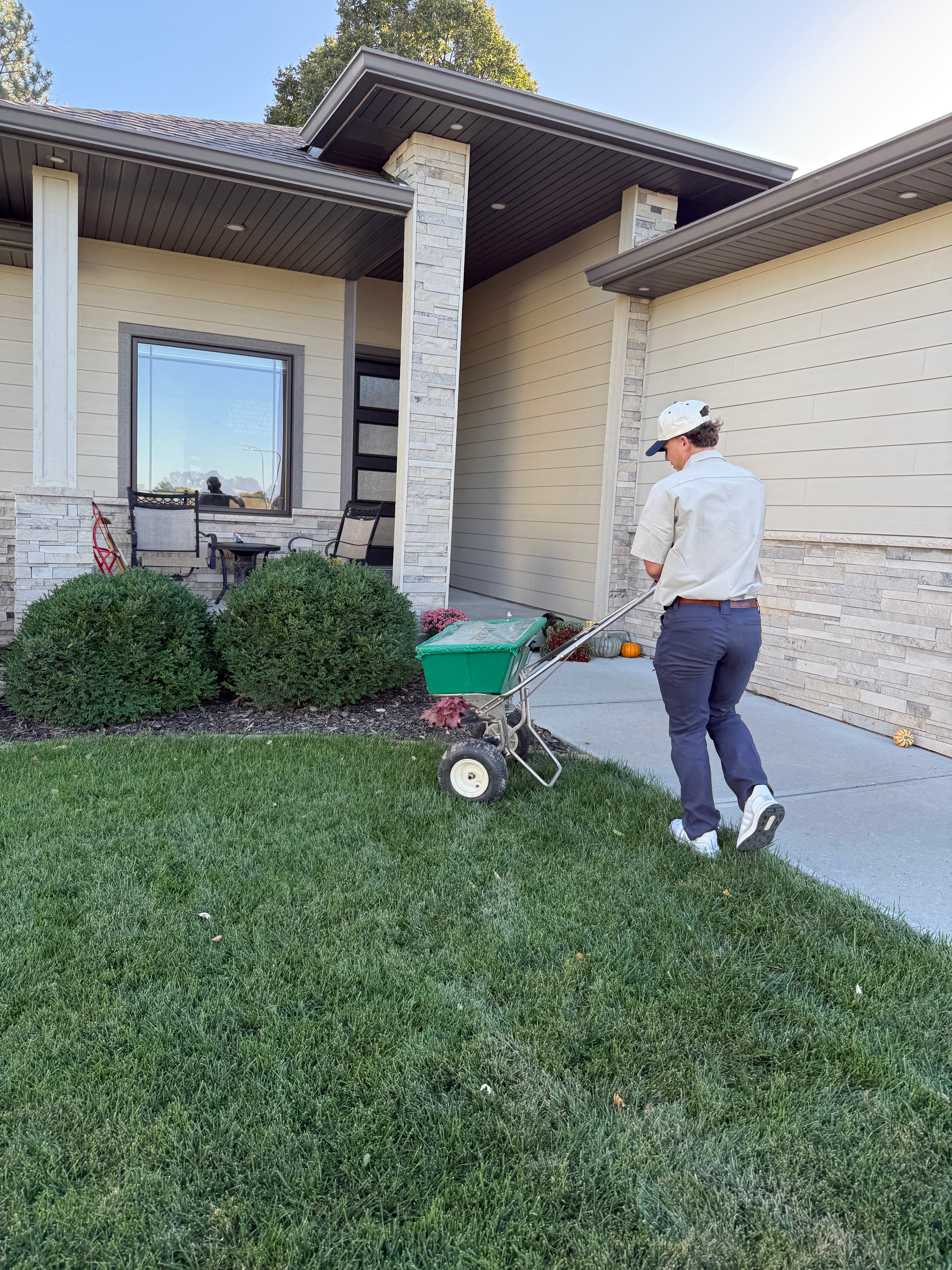
How Spring Lawn Density Is Built in April Not Summer
Lawn thickness is determined in April, not summer. Learn why this month is the most important window for building dense, weed resistant turf in Omaha and what homeowners can do to make the most of it.
Many Omaha homeowners believe thick, full lawns are created during summer when grass is growing fast and looks its best. In reality, lawn density is decided much earlier. April is when grass plants determine how thick your lawn will be for the entire season.
At Brightside Lawns, we see this pattern every year across Omaha neighborhoods. Lawns supported correctly in April develop better density, stronger color, and improved weed resistance long before summer arrives. Lawns that struggle in April often spend the rest of the season trying to recover.
What Lawn Density Really Means
Lawn density refers to how many grass plants and active shoots occupy the soil surface. Dense lawns have multiple growing points close together, creating a fuller appearance and limiting space for weeds to establish.
Density is not created by mowing more often or watering more heavily in summer. It is built when grass produces new shoots, a process called tillering. In Omaha, tillering happens most efficiently in spring, especially during April.
Why April Is the Prime Density Building Window
April provides the ideal balance of conditions for shoot development. Soil temperatures are warm enough for roots to function, while air temperatures remain cool enough to avoid stress. This allows grass to invest energy into structure rather than survival.
During summer, grass growth may appear fast, but plants are not producing many new shoots. Heat forces turf to conserve energy, so it simply stretches existing blades. April growth, by contrast, builds the framework of the lawn.
Root Strength Comes Before Thickness
Dense lawns start with healthy roots. In April, grass plants focus heavily on root expansion. Strong roots support more shoots above ground and allow the lawn to maintain density later in the season.
If roots are stressed or underdeveloped during this phase, the lawn cannot sustain thickness during summer. This is why early season fertilization focuses on root support rather than forcing rapid top growth.
The Importance of Proper Mowing Height
Mowing height plays a critical role in density development. Cutting grass too short reduces photosynthesis and limits energy production. Less energy means fewer new shoots and weaker roots.
Maintaining appropriate mowing height in April allows grass to capture sunlight and fuel tillering. Slightly taller grass also shades the soil, helping retain moisture and moderate temperature. These conditions support denser growth.
Why Summer Fixes Rarely Work
Homeowners often try to correct thin lawns in summer with heavy fertilization or increased mowing. Unfortunately, heat and humidity place grass under stress, limiting its ability to respond.
Even with proper care, summer is not an effective time to build density. Improvements are often temporary, and true thickness rarely increases until fall. This is why April care is so critical.
The Role of Early Season Fertilization
Fertilization works best when grass can efficiently absorb nutrients. In April, roots are active and soil biology is waking up, allowing nutrients to support both root and shoot development.
Balanced spring fertilization helps grass fill in naturally without becoming overly lush or weak. This steady approach supports density that lasts.
Soil Conditions Shape Density Results
Omaha soils vary widely from property to property. Clay content, compaction, and drainage all influence how well grass can thicken. April is when these limitations become visible.
Lawns with compacted soil may green up but fail to fill in. Addressing soil health early improves density far more effectively than adding more fertilizer.
Managing Foot Traffic During April
Soils are often moist and vulnerable in April. Foot traffic, pets, and equipment can compress soil and damage developing roots, reducing the lawn's ability to produce new shoots.
Managing traffic during this window protects the foundation of lawn density. Wear patterns created in April often persist for months.
How Dense Lawns Naturally Resist Weeds
Dense turf shades the soil and limits opportunities for weeds to establish. When grass fills in during April, it naturally reduces weed pressure later in the season.
Thin lawns allow sunlight to reach bare soil, creating ideal conditions for weed growth. Density is one of the most effective forms of weed prevention.
Setting Expectations for the Season Ahead
April reveals what a lawn is capable of becoming. Some lawns will thicken quickly, while others may improve gradually over time. Understanding your lawn's potential helps guide smart care decisions.
Professional lawn care programs in Omaha focus on maximizing this early window without forcing results. Consistency in April leads to stronger performance all season.
Lawn Density Is Built in Spring
Lawn density is built in April, not summer. Supporting roots, mowing correctly, managing traffic, and fertilizing appropriately during this month creates a thicker, healthier lawn that holds up through summer stress.
At Brightside Lawns, our spring programs are designed around this principle, helping Omaha lawns reach their full potential before summer arrives.