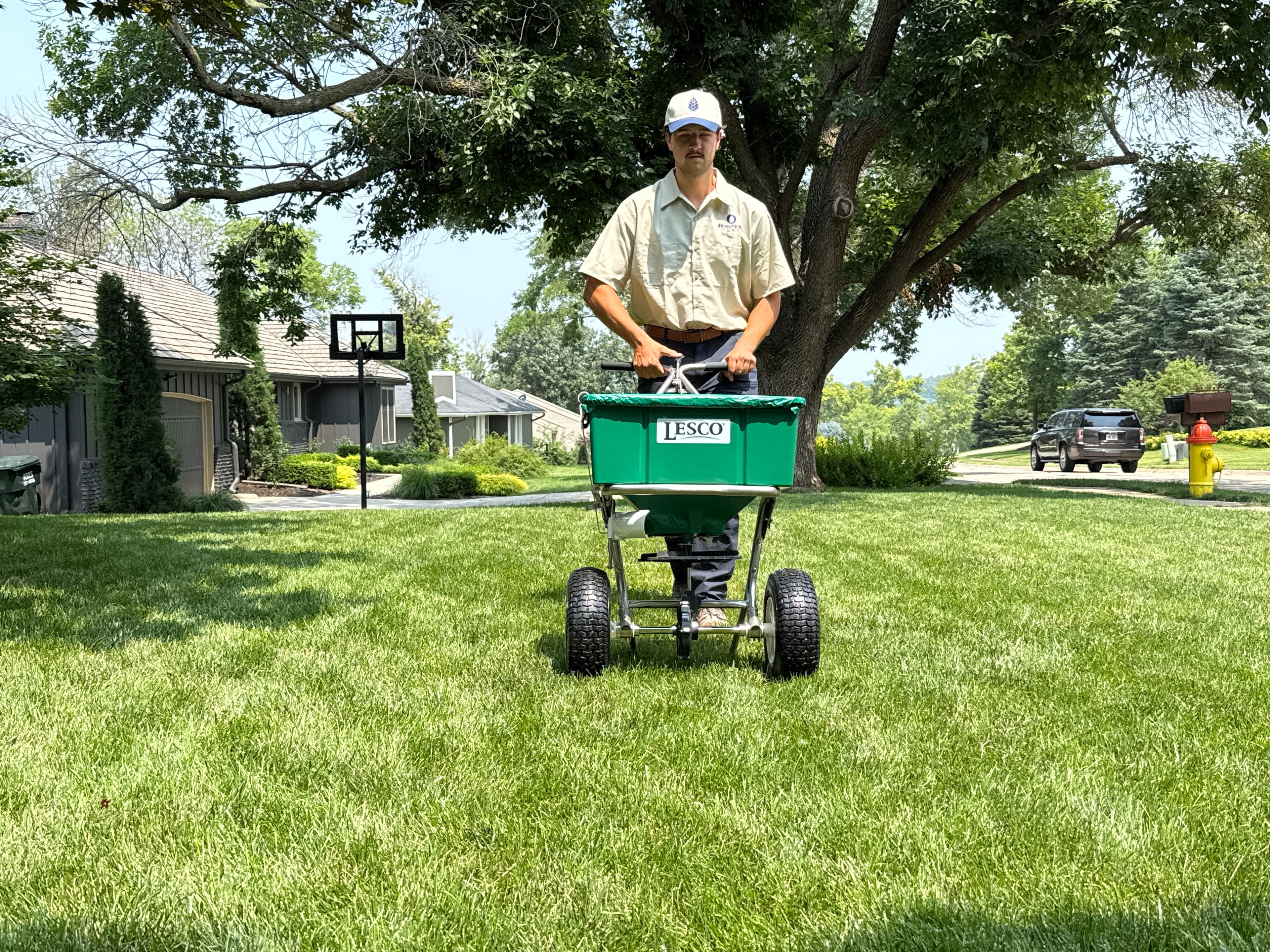
Why Lawn Fertilizer Works Differently in April Than Early Spring
Fertilizer applied in early spring often underperforms, but April changes everything. Learn why Omaha lawns absorb and use nutrients more effectively in April and how proper timing leads to stronger, thicker turf all season long.
Many Omaha homeowners apply fertilizer in early spring expecting quick results, only to feel disappointed when growth seems slow or uneven. Then April arrives and fertilizer suddenly appears to work almost overnight. The product did not change, but the lawn did.
April is when fertilizer truly becomes effective for Omaha lawns. Understanding why it works differently now helps homeowners avoid overapplication, wasted treatments, and unrealistic expectations earlier in the season.
Early Spring Fertilizer Has Limited Impact
In late winter and early spring, grass is only partially active. Soil temperatures fluctuate, roots remain sluggish, and soil biology is still mostly dormant. Fertilizer applied during this period often sits in the soil waiting for better conditions.
These early applications are not wasted, but they are not fully utilized right away. Grass cannot efficiently absorb or process nutrients until active growth begins.
April Marks the Shift to Efficient Nutrient Uptake
By April, soil temperatures in Omaha rise to a level that supports consistent root activity. Grass plants can absorb nutrients steadily and convert them into meaningful growth.
Roots expand, energy production increases, and fertilizer fuels both root development and shoot production. Nutrients that seemed inactive weeks earlier now drive visible improvement.
Soil Biology Becomes Highly Active
Fertilizer effectiveness depends heavily on soil microorganisms. These organisms break down nutrients and make them available to grass roots. During cold conditions, this process slows dramatically.
As soil warms in April, microbial activity increases and unlocks nutrients already present in the soil, including those from earlier fertilizer applications. This biological shift plays a major role in improved lawn response.
April Fertilization Builds Structure Not Just Color
In April, grass uses nutrients to build roots and produce new shoots. Fertilizer supports lawn structure rather than just surface color.
This is why April fertilization helps lawns thicken naturally and improve long term resilience. Later applications often push blade growth without improving density.
Why More Fertilizer Is Not Better in April
Because fertilizer works more efficiently in April, overapplication can become harmful. Excess nutrients may force top growth at the expense of roots, creating a lush but weak lawn.
Balanced application rates are critical. The goal is controlled, steady growth that strengthens the lawn.
Temperature Stability Improves Results
April brings greater temperature consistency compared to early spring. Soil temperatures fluctuate less, allowing roots to remain active longer.
This stability increases nutrient uptake efficiency and reduces waste from runoff or inactivity.
Moisture Helps Nutrients Reach the Root Zone
April rainfall patterns in Omaha often provide consistent moisture. This helps nutrients move into the soil profile where roots can access them.
In early spring, frozen or saturated soil limits this movement. April conditions improve fertilizer performance naturally.
How April Fertilization Shapes Summer Performance
Lawns that receive properly timed fertilization in April typically handle summer heat and stress better. Strong roots and improved density increase drought tolerance and durability.
Skipping or mismanaging this window often leads to lawns that struggle later, even with additional summer care.
Why Results Differ Between Properties
Not every lawn responds the same way in April. Soil condition, compaction, shade, and drainage influence fertilizer effectiveness.
Some lawns show rapid improvement, while others respond more gradually. Understanding these differences helps set realistic expectations.
A Smarter View of Spring Fertilization
Fertilizer does not become stronger in April. The lawn becomes more capable. When roots, soil biology, moisture, and temperature align, nutrients finally do their job.
For Omaha homeowners, patience early and precision in April lead to stronger lawns throughout the season.
At Brightside Lawns, our April fertilization strategy is built around this understanding, helping lawns grow stronger at the right time, not just faster.